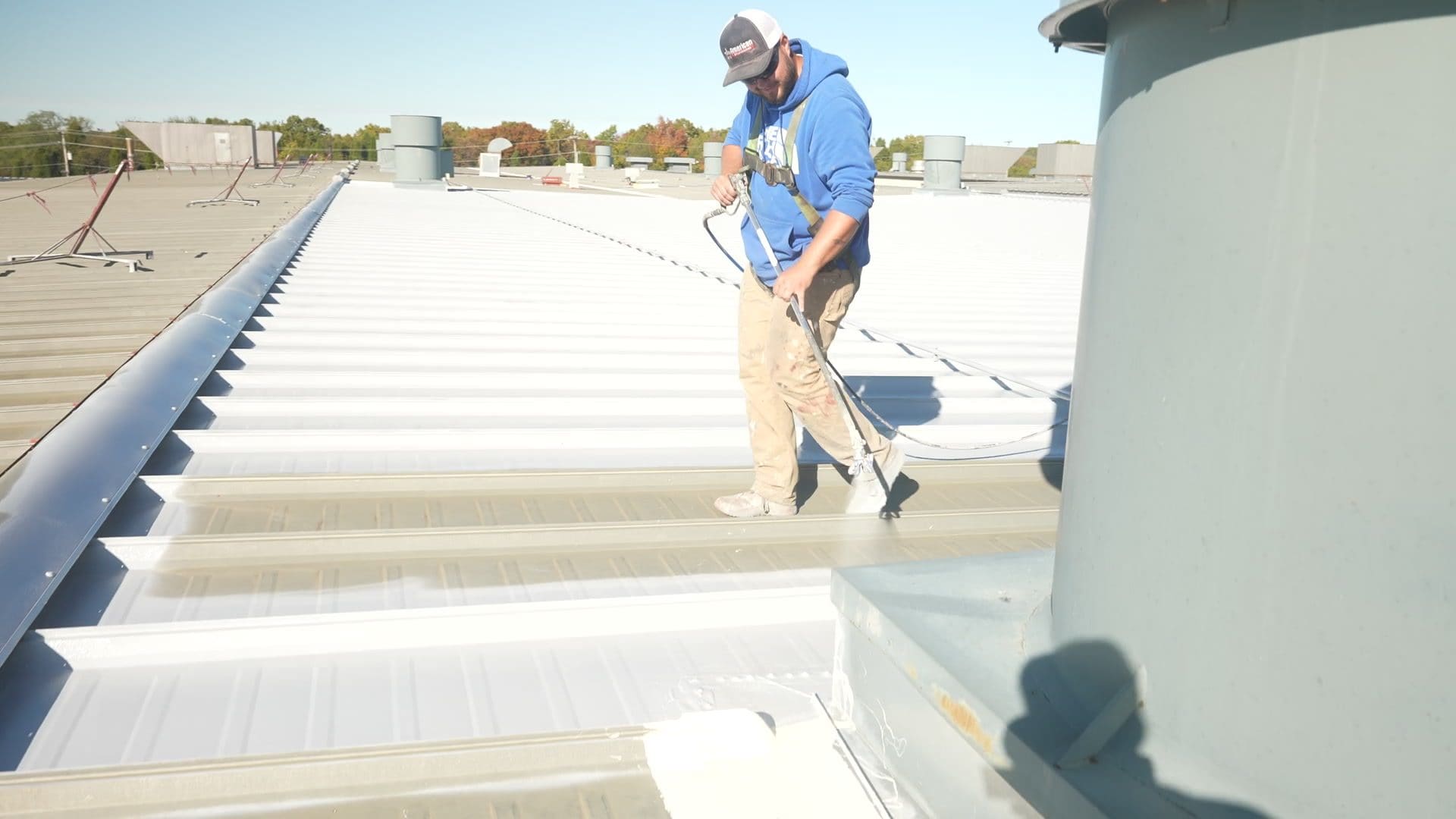
Silicone, acrylic, elastomeric: shop for a commercial roof coating and you’ll hear all three, often in the same sentence. They aren’t three separate products, and the words overlap. Here’s what each term means, and how Shane Waters, who runs the commercial division at Midwest Roofing, chooses between them on a real roof.
Not sure which coating your roof needs? Get a free commercial roof assessment or call (417) 744-5670.
Roof Coating Terms at a Glance
| Term | What it means | Where Shane uses it |
|---|---|---|
| Elastomeric | A property, not one product: a coating that can stretch and recover as the building moves. In everyday roofing talk, it usually means acrylic. | Used interchangeably with acrylic |
| Acrylic | A common elastomeric coating chemistry | Sloped roofs that shed water, like the Monett metal roof |
| Silicone | Another coating chemistry, also elastomeric | Lower-sloped roofs with lots of ponding water |
What Is an Elastomeric Roof Coating?
Elastomeric describes how a coating behaves: it can stretch and return to shape as a building expands, contracts, and shifts. That’s the quality Shane wanted on the Monett metal roof, which “needs to have the elasticity to move with the building.” Acrylic and silicone roof coatings are both elastomeric.
That’s why comparing “elastomeric vs. silicone” can be confusing. Most of the time, the person asking really means acrylic vs. silicone: two elastomeric chemistries suited to different roofs. The rest of this article uses those two names, and calls out where Shane uses elastomeric to mean acrylic.
Is Elastomeric the Same as Acrylic?
In everyday roofing talk, mostly yes. As Shane puts it, “elastomeric and acrylic is pretty much the same.” Strictly speaking, elastomeric is a broader word that can also describe silicone. So if a quote just says elastomeric, ask which chemistry it means and which manufacturer’s product will go on your roof.
What Is an Acrylic Roof Coating?
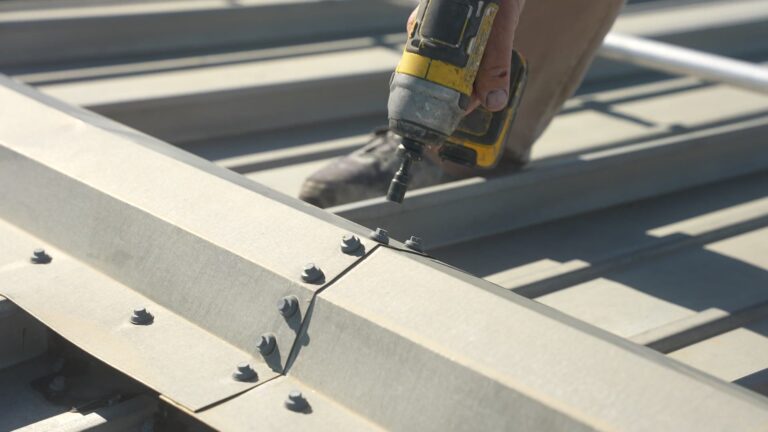
An acrylic roof coating is the common elastomeric choice for roofs with enough slope to shed water that still need flexibility, like the Monett metal roof Shane describes. On that factory, the crew also used an acrylic roof mastic on seams and details during prep, before the acrylic coating went on over the whole roof.
What Is a Silicone Roof Coating?
A silicone roof coating is another elastomeric coating chemistry, and Shane reaches for it where water sits. “Silicone does great on lower sloped roofs with lots of ponding water,” he says. Like acrylic, it goes on over the existing roof as one seamless layer, at the thickness the manufacturer specifies for that roof.
Elastomeric vs. Silicone Roof Coating: Which Is Better?
Neither one wins on every roof. The better coating is the one that fits your roof’s slope and how much water sits on it. In Shane’s approach, a roof that sheds water and needs to move with the building points to an elastomeric coating, in practice acrylic, while a lower-sloped roof with lots of ponding points to silicone.
Why Did We Use Acrylic on the Monett Factory Roof?
Because of the slope. “It has enough slope that it’s shedding water, but it needs to have the elasticity to move with the building,” Shane says of the Monett metal roof. Water wasn’t ponding there, so the job called for a flexible acrylic system rather than a silicone one built for standing water.

Which Coating Goes on Metal, TPO, EPDM, or Mod-Bit?
Each roof type gets its own coating. Shane says there’s “a different acrylic, silicone type of coating engineered for each one of those roofing systems.” So the choice isn’t just acrylic or silicone. It’s the specific product the manufacturer makes for your roof, applied to their specs, after testing shows it will bond.
Not sure your roof qualifies? See can you coat a metal, TPO, EPDM, or mod-bit roof.
Does the Coating Type Change the Prep Work?
For acrylic and silicone alike, the three phases stay the same: clean and wash, repair and prep, then apply. What changes are the details, like primers and mastics, which follow the manufacturer’s specs for the coating and the roof. That is why testing comes before choosing a product.
How Do You Choose the Right Coating for Your Roof?
Start with testing, not a brochure. Shane looks for a contractor “doing the proper test work before the coating to make sure you’re using the proper coating system.” That testing shows whether acrylic or silicone fits your roof, and which manufacturer product will bond to it.
For cost, lifespan, and how a coating compares to a full tear-off, read metal roof coating vs. replacement, or see all of our commercial roof coating options.
Get the Right Coating, Not Just a Coating
We’ll test your roof, tell you whether acrylic or silicone fits it, and spell out any manufacturer warranty in writing. Shane’s team serves commercial properties across central and southwest Missouri, from Monett to Columbia.
Free roof inspection
Get your free roof inspection
A local pro will look over your roof, take photos of anything we find, and help with your insurance claim if there’s storm damage. No cost, no pressure.
Prefer to talk? Call 573-619-5641
- Free, no-pressure inspection
- Photos and video of what we find
- Help with your insurance claim
- Locally owned and operated since 2008
Request your free inspection
Takes about 30 seconds. We’ll call you to schedule.
Related Reading
- Commercial roof coatings from Midwest Roofing
- Metal roof coating vs. replacement: a commercial roofer explains
- Can you coat a metal, TPO, EPDM, or mod-bit roof?
- Commercial roofing services from Midwest Roofing
Sources
- On-camera interview with Shane Waters, Commercial Roofing Division, Midwest Roofing, recorded on the Monett, Missouri job in November 2026.
- Acrylic Brush-Grade 220 Product Data Sheet — American WeatherStar. The acrylic sealant our crew used on seams, fasteners and penetrations on the Monett job.
- ASTM D6083/D6083M-24, Liquid-Applied Acrylic Coating Used in Roofing — ASTM International. The standard for acrylic elastomeric roof coatings.
- Roof Coatings Glossary — Roof Coatings Manufacturers Association. Definitions of acrylic and silicone roof coatings.
- Roof Coatings FAQs — Roof Coatings Manufacturers Association. Which roofs can be coated, rust treatment, ponding water and how long coatings extend roof life.
- How to Choose the Right Roof Coating — GAF. Compares acrylic and silicone, including ponding water warranty terms.
- High Solids Silicone Roof Coating — GAF. Silicone coating built to resist ponding water.
More free guides: roof warning signs with photos, a seasonal roof calendar and ladder safety. See them all in our Homeowner Resource Center.
Free roof inspection
Get your free roof inspection
A local pro will look over your roof, take photos of anything we find, and help with your insurance claim if there’s storm damage. No cost, no pressure.
Prefer to talk? Call 573-619-5641
- Free, no-pressure inspection
- Photos and video of what we find
- Help with your insurance claim
- Locally owned and operated since 2008
Request your free inspection
Takes about 30 seconds. We’ll call you to schedule.