
Most roof problems give you a warning before they turn into a stain on the ceiling. Here is what each warning sign looks like, what it usually means, and what to do about it. You can spot almost all of them from the ground or the attic.
Check from the ground first
You don’t need a ladder for this. The Asphalt Roofing Manufacturers Association recommends starting from the ground or an upstairs window, with binoculars if you have them.
- Walk all the way around the house. Binoculars or your phone’s zoom work well.
- Look at every slope you can see from an upstairs window.
- Check the yard, driveway and gutters for shingle pieces and granules (they look like coarse sand), especially after a storm.
- Go into the attic on a sunny day with a flashlight.
Leave the climbing to a pro. A wet, steep or two-story roof is no place to look for damage, and our roof inspection is free.
Warning signs on the roof
Missing or torn shingles
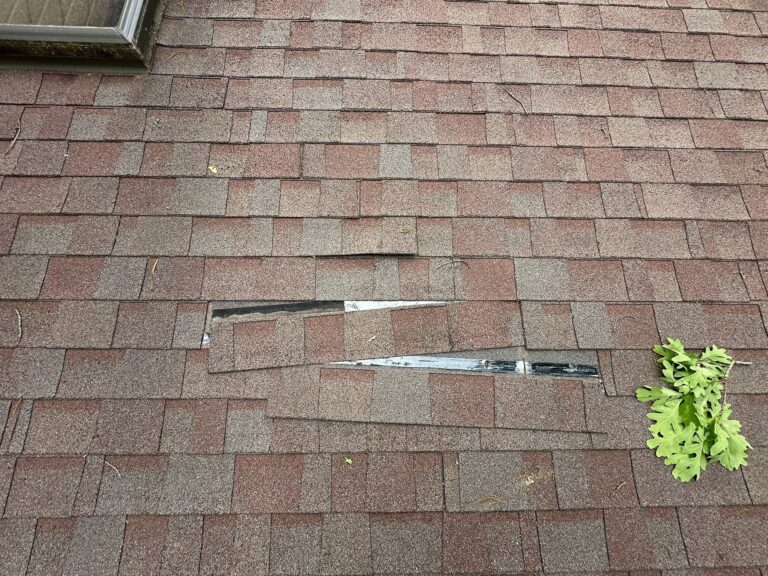
Usually caused by wind. Look for gaps in the rows, a patch that’s a different color, or shingle pieces in the yard. With a shingle gone, the layer underneath is open to sun and rain.
What to do: Call soon, ideally before the next rain.
Lifted, creased or loose shingles
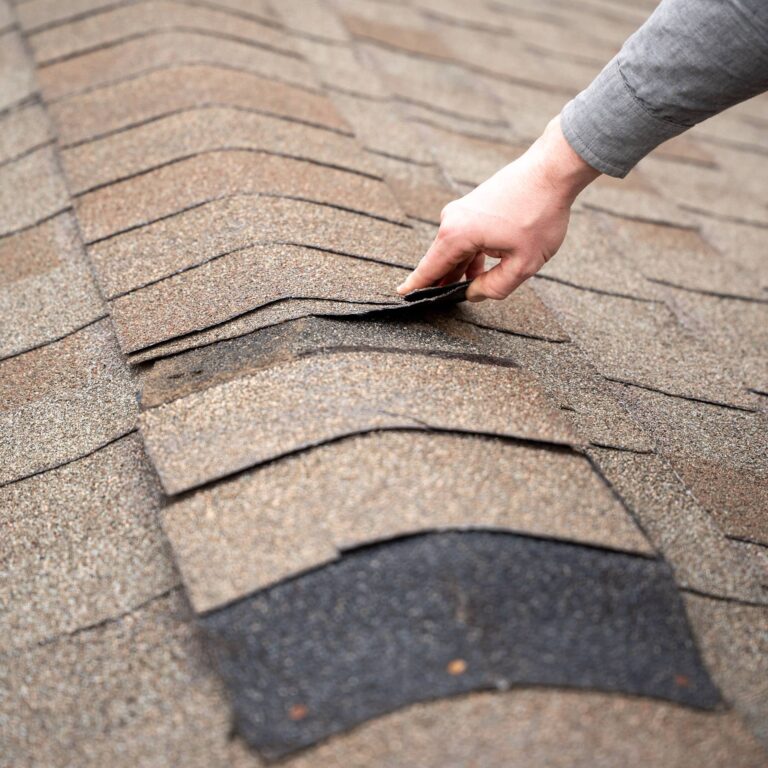
Each shingle is sealed to the row below it. Strong wind can break that seal and fold the shingle back, which leaves a crease. From the ground, you may see edges that look raised or shadow lines along a row. A loose shingle is usually the next one to blow off.
What to do: Have it checked. Caught early, the fix is usually small.
Hail hits
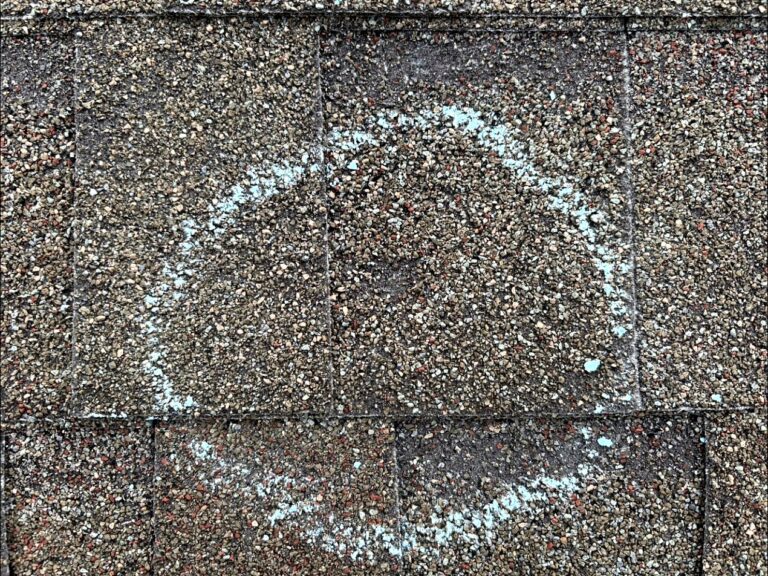
Hail knocks granules off and can bruise the shingle underneath. The hits are hard to see from the ground, so look for clues nearby: dents in gutters, downspouts, metal vents and the air conditioner, and granules piled at the bottom of downspouts.
What to do: After a hailstorm, get an inspection and call your insurance company soon. Read Does Hail Damage Mean You Need a New Roof?
Granule loss and bare spots
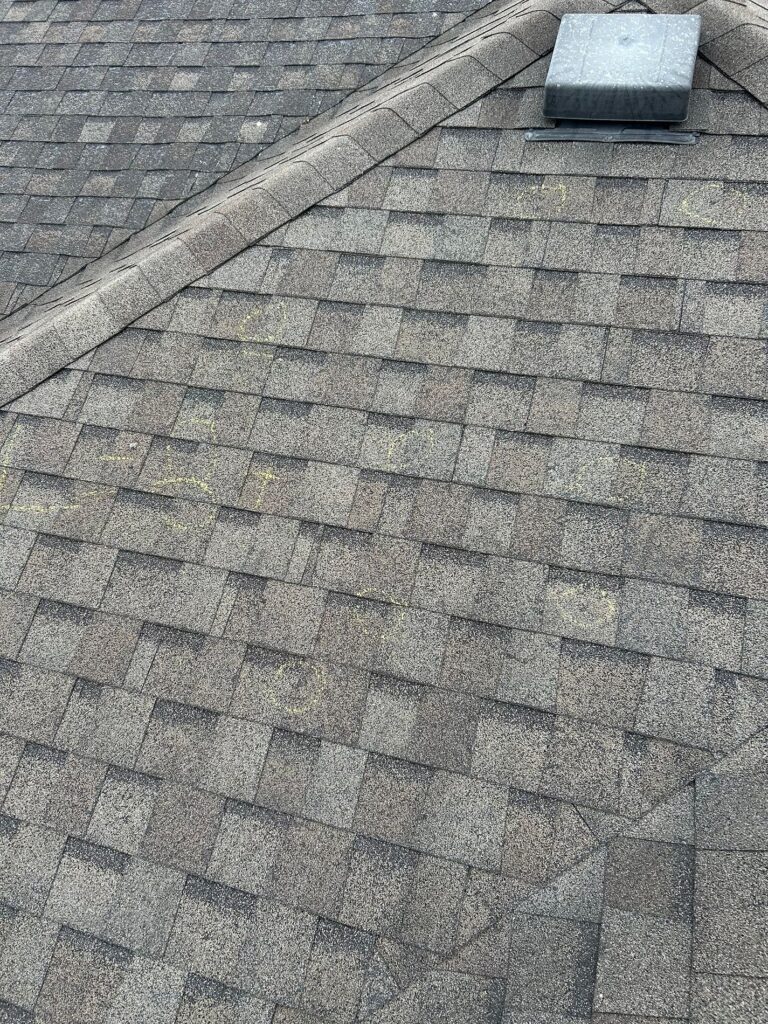
Granules are the sand-like coating that protects shingles from the sun. A few in the gutters is normal on a new roof. A lot of granules, or dark bare patches on the shingles, means they are wearing out or took hail.
What to do: Bring it up at your next inspection, or sooner if it showed up after a storm.
Wavy or sagging areas
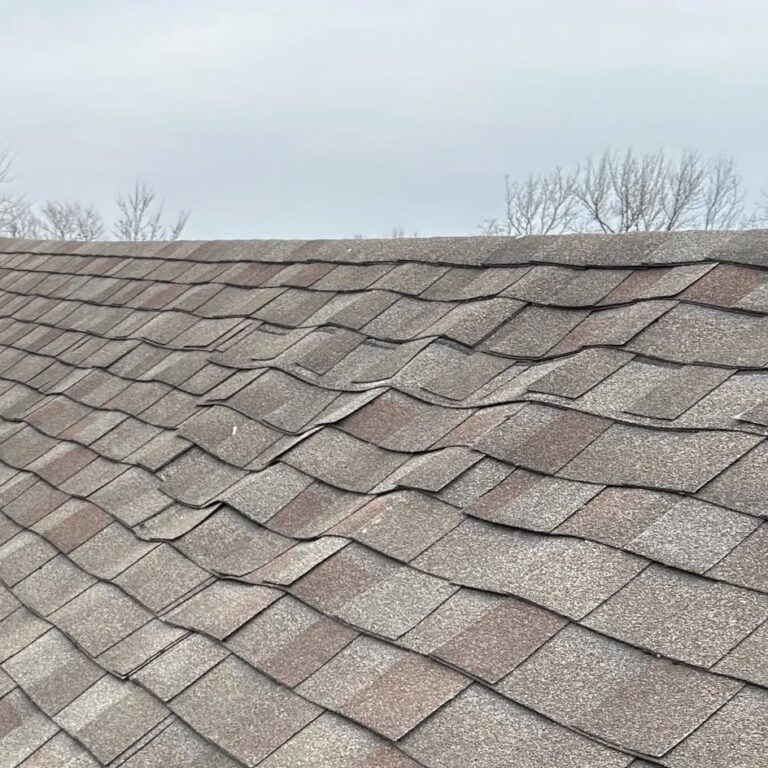
A roofline should look straight and flat. Waves, dips or a sagging ridge can mean the wood decking under the shingles is wet, soft or damaged.
What to do: Call soon, and don’t walk on that part of the roof.
Dark streaks
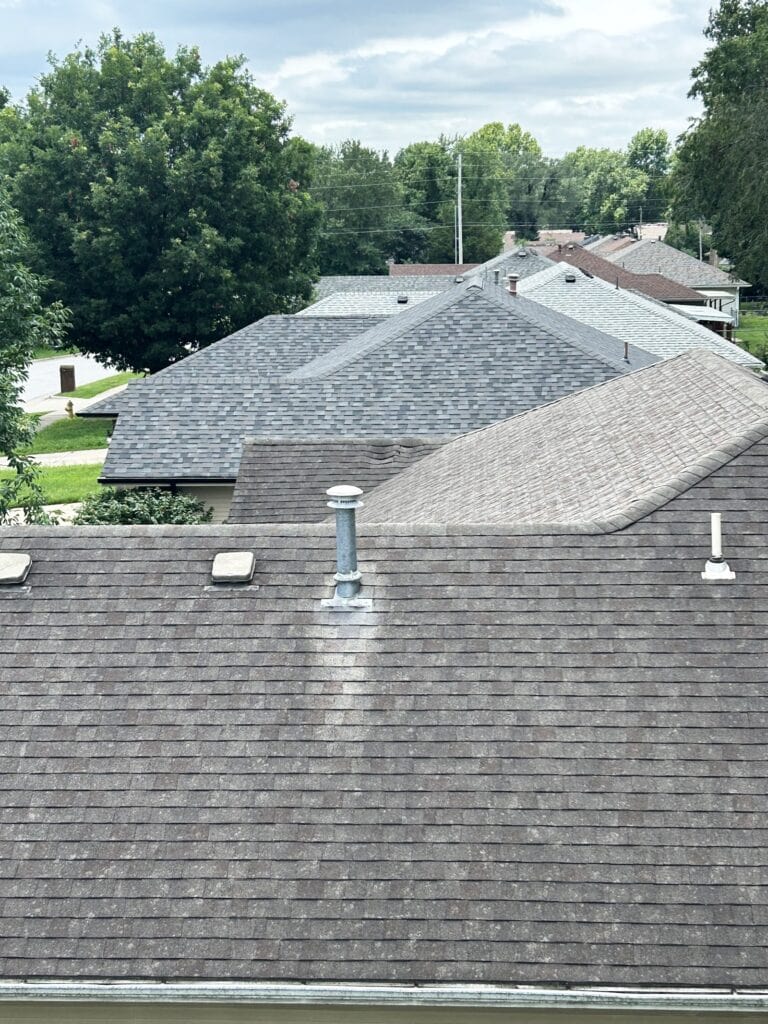
Black or green streaks running down the roof are usually algae, which grows where shingles stay damp. A clean strip below a metal vent or flashing is a giveaway. Streaks are mostly cosmetic at first, but they tell you that part of the roof stays wet.
What to do: Keep debris cleared and trees trimmed back, and ask about it at your next inspection.
Leaves and debris in the valleys

Valleys are where two slopes meet, so they carry the most water. In our gallon-of-water test, a leaf-filled valley held water for about 14 seconds before any came out.
What to do: Clear the valleys once the trees are bare, or let us do it.
Flashing, pipe boots and vents
Flashing is the metal around chimneys, walls and skylights. Pipe boots are the rubber collars around plumbing vents. The Asphalt Roofing Manufacturers Association calls flashings the most vulnerable points on a roof. From the ground, look for rusted, bent or loose metal, caulk pulling away, and cracked or split rubber around pipes.
What to do: Have them looked at once a year.
Gutters that overflow or pull away
Water spilling over the gutters in a rain, gutters sagging away from the house, stains on the fascia board behind them, or washed-out soil near the foundation all mean water isn’t draining the way it should.
What to do: Clean them out and check the downspouts. Our Fall Gutter Guide shows what to look for.
Warning signs inside your home
Stains on ceilings or walls
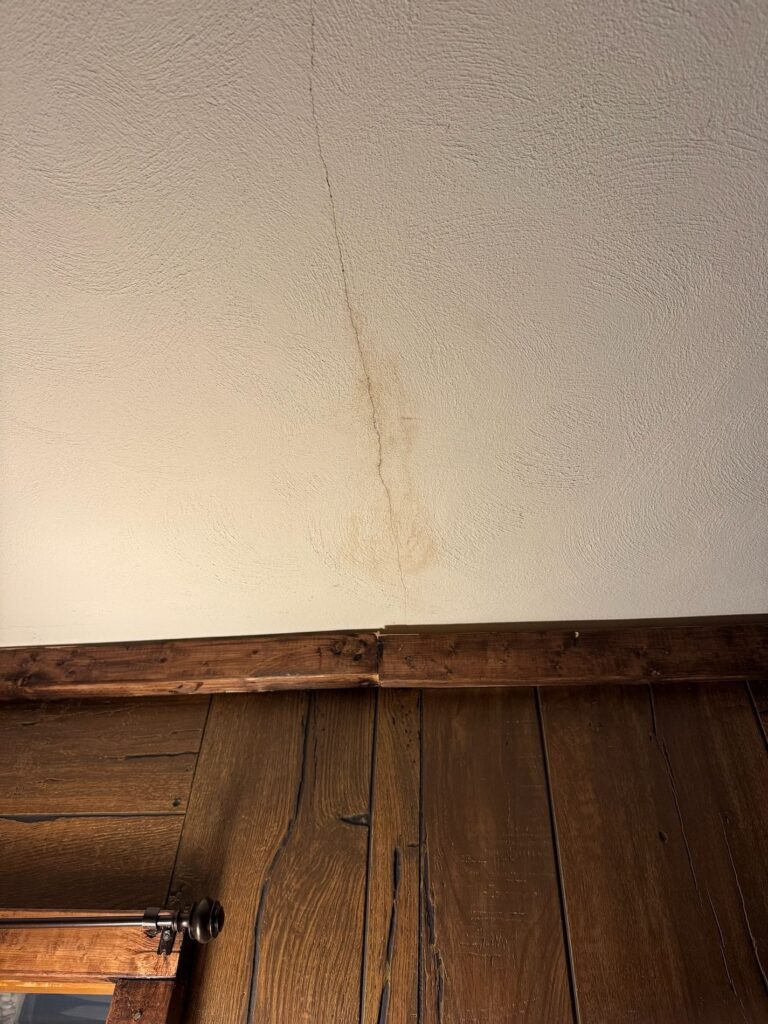
Yellow or brown rings, peeling paint or bubbling drywall, often near chimneys, vents and outside walls. The leak on the roof is often not right above the stain, because water runs along the wood before it drips.
What to do: Catch the water, take photos and call us. Don’t wait for it to dry out.
In the attic
Check on a sunny day, step only on the joists, and bring a flashlight. Look for:
- Daylight coming through the roof boards
- Dark stains on the wood decking or rafters
- Damp or matted insulation
- Mold or a musty smell
- Sagging or cracked framing
- In winter, frost or drips on the underside of the roof
How urgent is it?
| What you see | What to do |
|---|---|
| Water coming inside, or a section of roof missing after a storm | Call right away. Catch the water, take photos and stay off the roof. A roofer can tarp it to stop more damage. |
| Hail or high wind just hit your area | Look from the ground, take dated photos, and get an inspection soon. Call your insurance company as soon as you can. |
| Missing, lifted or creased shingles | Call within a few days, before the next storm. |
| A wavy or sagging roofline | Call soon, and don’t walk on that area. |
| Lots of granules, cracked pipe boots or loose flashing | Schedule an inspection. |
| Streaks, a few granules, leaves in the valleys | Bring it up at your yearly check, or let ShingleCare+ handle it. |
Free roof inspection
Get your free roof inspection
A local pro will look over your roof, take photos of anything we find, and help with your insurance claim if there’s storm damage. No cost, no pressure.
Prefer to talk? Call 573-619-5641
- Free, no-pressure inspection
- Photos and video of what we find
- Help with your insurance claim
- Locally owned and operated since 2008
Request your free inspection
Takes about 30 seconds. We’ll call you to schedule.
Keep reading
- Roof maintenance calendar: what to check each season and after a storm
- Leaves in roof valleys: a gallon-of-water test
- Fall Gutter Guide
- Does hail damage mean you need a new roof?
- Storm restoration
- All homeowner resources
Common questions
Can I check my roof for damage without getting on it?
Yes. Most warning signs show up from the ground, an upstairs window or the attic. Binoculars or a phone camera on zoom help. If you see something you’re not sure about, take a photo and call us.
Does a stain on my ceiling always mean the roof is leaking?
Not always. Plumbing, air conditioning lines and condensation in a poorly ventilated attic can leave stains too. A quick look in the attic above the stain usually tells you which it is.
How often should I have my roof inspected?
The Asphalt Roofing Manufacturers Association recommends once a year, ideally in spring after the severe weather has passed. We also recommend a check after any hail or high-wind storm.
Sources
Inspection and warning-sign guidance on this page comes from these sources:
- Asphalt Roofing Manufacturers Association, via Facility Executive: Spring Cleaning: Asphalt Roofing Tips
- GAF: Understanding Roof Storm Damage: Signs, How to Inspect and Next Steps
- IKO: How to Check Your Roof for Damage