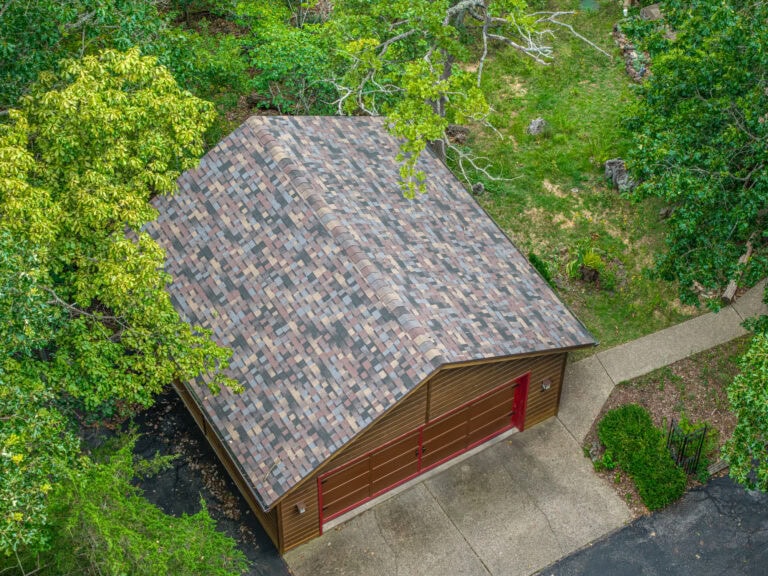
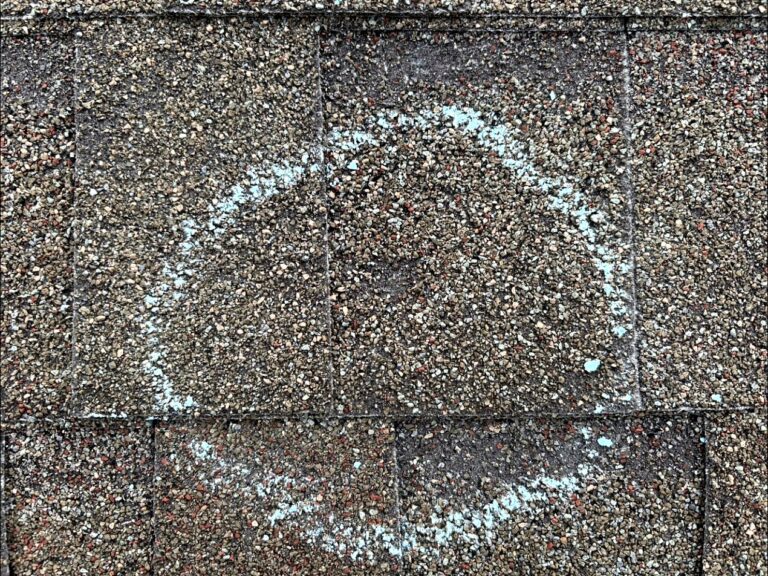
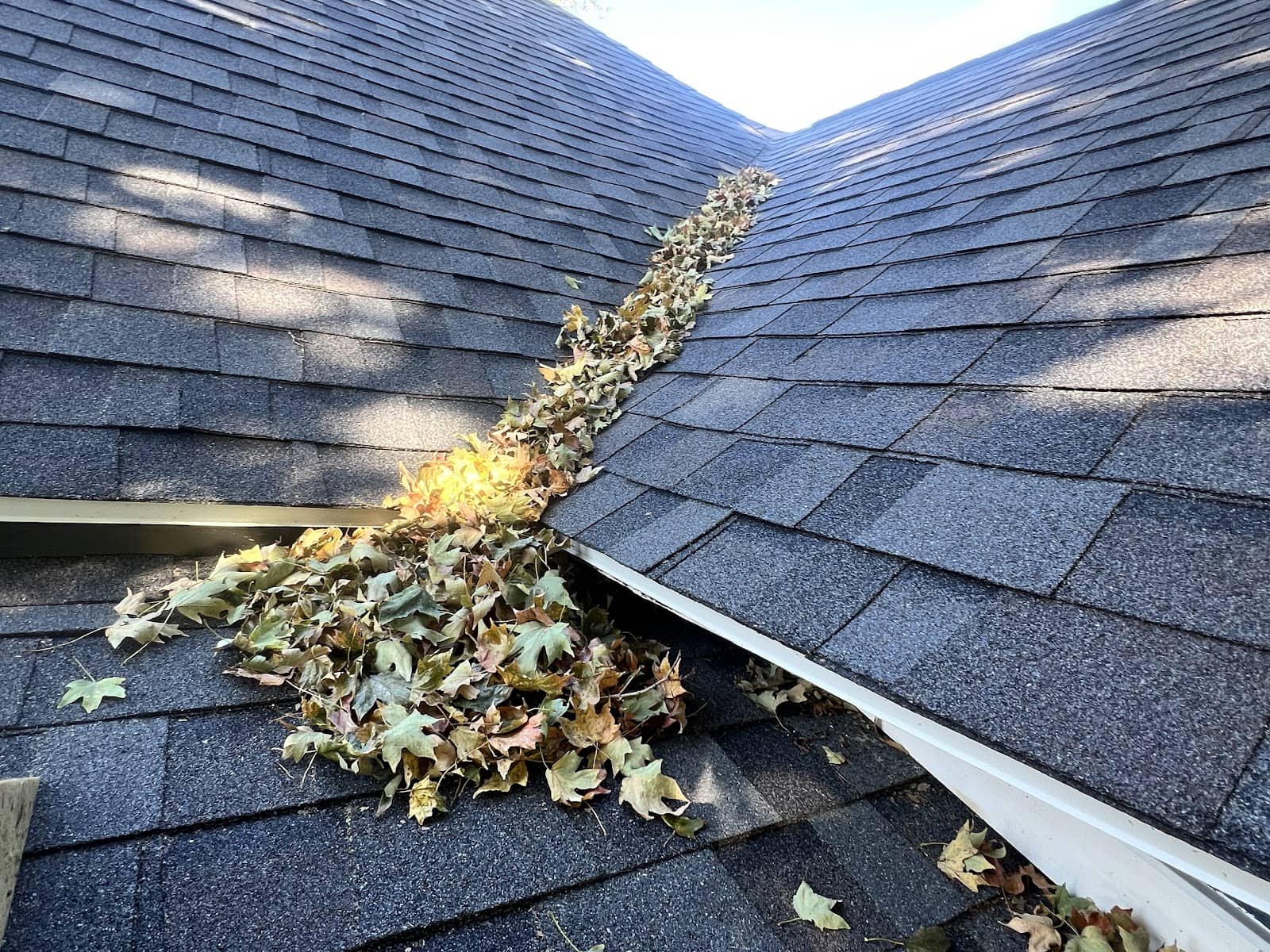
Leaves sitting in a roof valley look harmless, but they act like a dam. We tested it on a Columbia-area home: we poured one gallon of water into a leaf-filled valley, cleaned the valley, then poured a second gallon in the same spot. Here is what happened, why it matters, and how to clear leaves without hurting your shingles.
Do leaves in a roof valley really slow down water?
Yes, a lot. In our test, the whole gallon went into the leaves before any water came out the bottom of the pile, and water was still seeping out from under the leaves long after the jug was empty. In the clean valley, water was out of the valley within seconds, with half the jug still left to pour.
What happened in our gallon-of-water test?
Owner Derek Kinder poured one gallon into a roof valley about 10 feet long, first with a pile of fall leaves in it and then after clearing it. Same valley, same spot, same amount of water. Times below are measured from the moment the pour started.
| What we measured | Valley full of leaves | Clean valley |
|---|---|---|
| Water first comes out of the valley | About 14 seconds, only after the whole gallon was poured | Within seconds, with half the jug still left |
| Water reaches the gutter | Slow trickle from under the leaves | Seconds later, all the way to the gutter |
| Water left sitting on the roof | Still seeping out from under the leaves after the jug was empty | None; the valley drained as the water hit it |
| Overall | The clean valley drained roughly 10 times faster | |
One gallon is a light rain on a small part of one valley. In a real Missouri storm, a leaf-packed valley gets that much water over and over, and the leaves keep shingles wet long after the rain stops.
Why is water sitting on shingles a problem?
Shingles are built to shed water, not hold it. Wet leaves trap moisture against the roof, which feeds algae, wears shingles faster and lets freeze-thaw cycles work on sealants through the winter. Valleys are where two roof slopes send their water, so a clogged valley is one of the most common places for a slow leak to start.
The tricky part is the delay. Debris that sits season after season breaks down and packs in, and the damage builds over years. By the time a stain shows up on a ceiling, the problem has usually been there a long time, and the fix now includes insulation, drywall and paint, not just a cleaning.
When should I clear leaves off my roof?
Once the trees near your house are mostly bare, usually around Thanksgiving in central and southwest Missouri. Clearing then keeps the roof dry through winter freeze-thaw and the spring storm season. Homes with heavy tree cover may need a second clearing. Check the valleys and gutters at the same time; they are where leaves pile up first.
How do I blow leaves off a roof without damaging shingles?
Always point the blower down the roof, the same direction water flows. Leaf blowers push air at roughly 80 to 130 mph, and blowing sideways or up the roof can lift shingle edges and break the seal that holds them down. Work from the top down and push debris off the roof edge, not into the gutters.
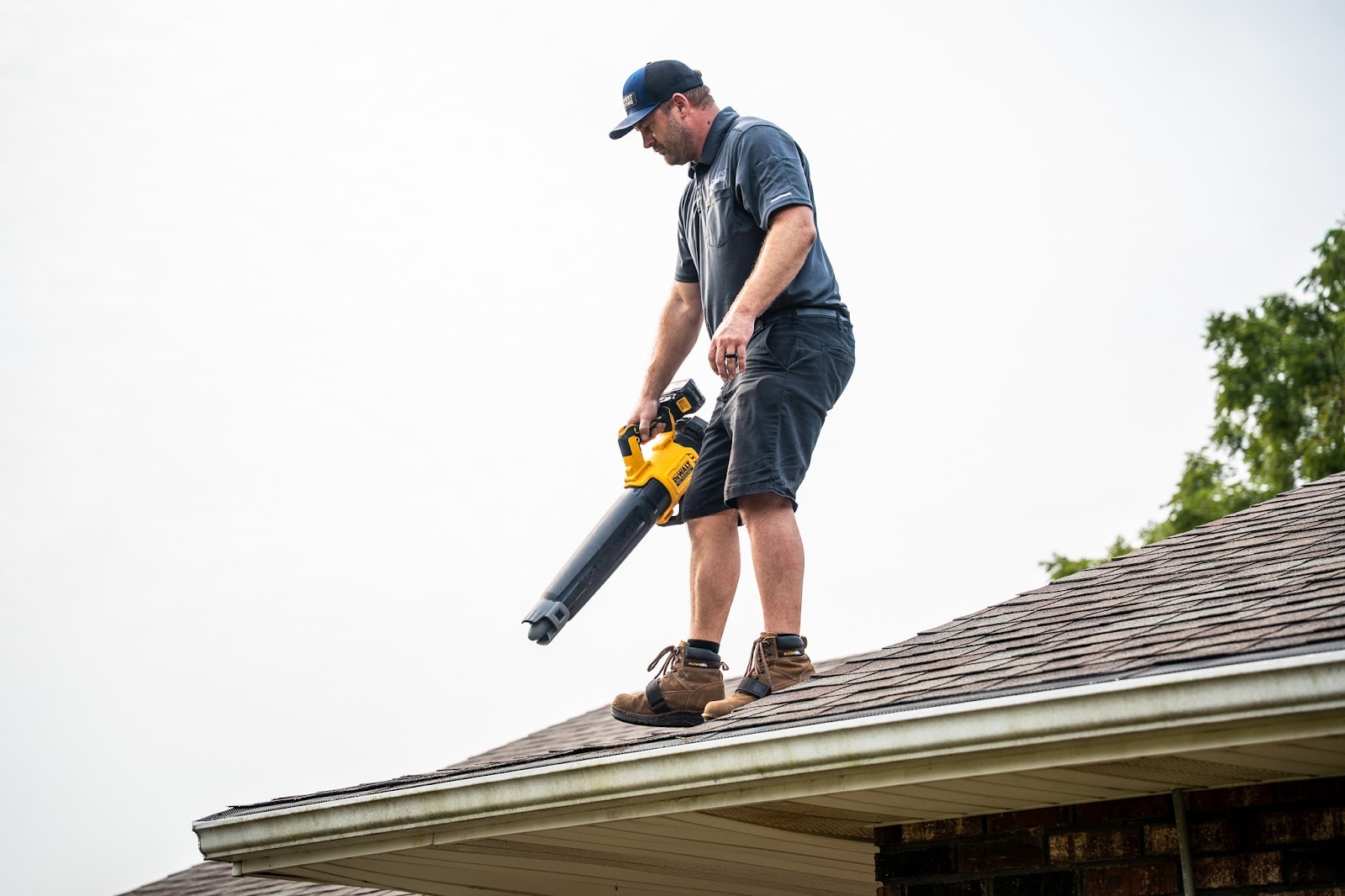
- Only work on a dry, walkable roof in good weather, with proper fall protection.
- Never blow leaves sideways or uphill across the shingles.
- Don’t pile debris into the gutters; clean them out afterward.
- If your roof is steep, high or slick, leave it to a pro.
What warning signs can I see from the ground?
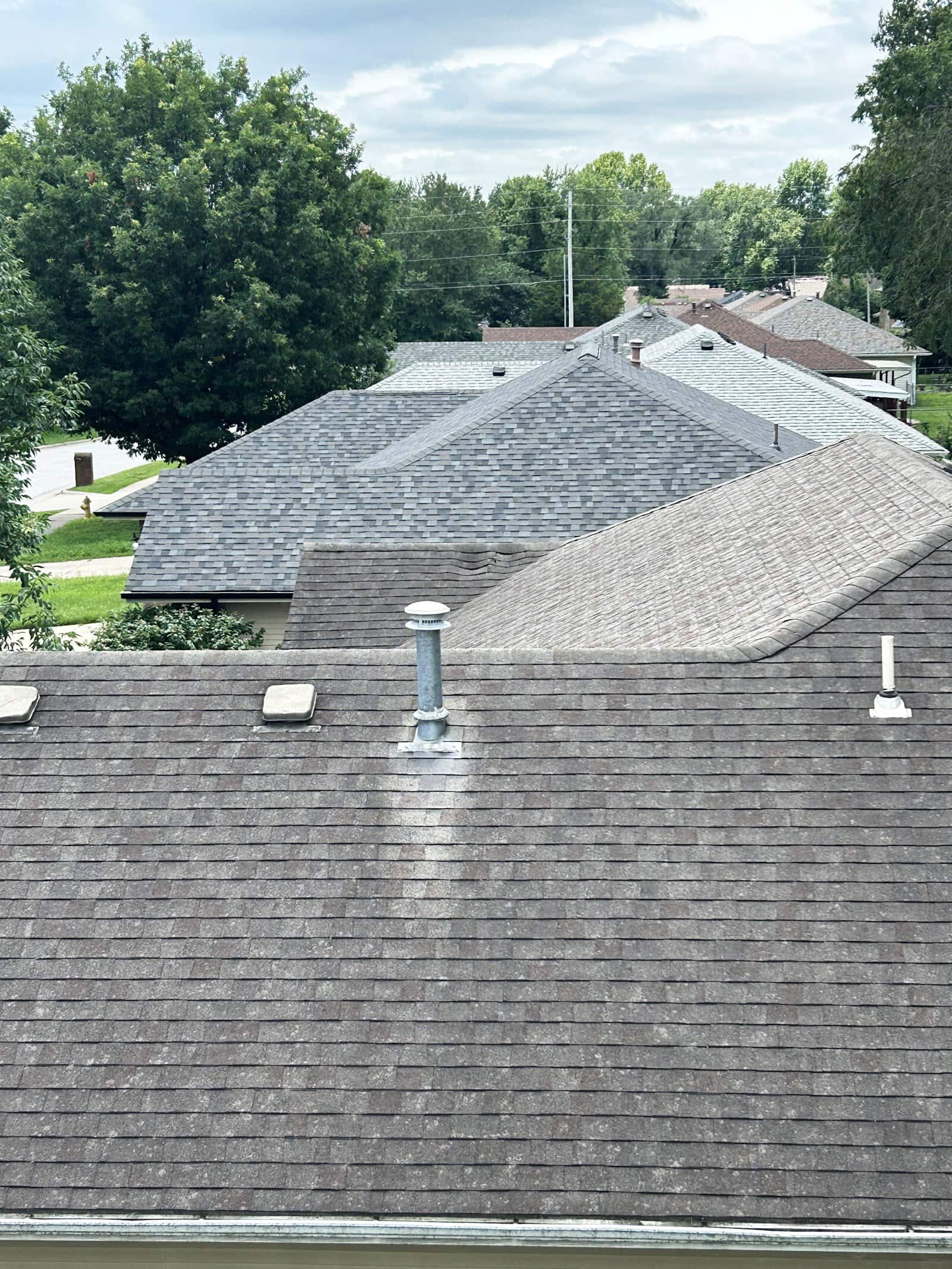
Look for leaves piled in valleys or behind chimneys, dark streaks running down the shingles, and “tiger stripes” on the face of your gutters. Another clue is unusually clean strips of shingle just below metal flashing or vents, where metal runoff keeps algae from growing; it means the rest of the roof has algae. These signs usually build over a couple of years.
How often do homeowners actually clean their roofs?
Not often. From what we see in the field, about 1 in 10 homeowners or fewer clean their roof every year. Most people think about gutters but never look at valleys, which is why we built yearly roof cleaning into our maintenance plan.
Want us to handle it?
- ShingleCare+ is $99 a year: we clear debris from the roof and valleys, clean the gutters (or gutter guard tops), seal exposed nail heads and pipe boots, and send you a Roof Health Report with photos.
- Seeing stains or streaks already? Book a free 360° roof inspection.
- Already have a leak? See our roof repair services.
- Gutters next: read our Fall Gutter Guide and Can Clogged Gutters Cause Roof Leaks?
We have offices in Eldon (Lake of the Ozarks), Columbia and Springfield, and serve homeowners within about 100 miles of each, including Jefferson City.
FAQ
Can leaves on my roof cause a leak?
Yes. Leaves trap water against the shingles, especially in valleys where two slopes drain together. Over several seasons that moisture wears the shingles and sealants and can lead to leaks, often years before you see a ceiling stain.
Is it OK to leave a few leaves on the roof?
A light scatter that blows off on its own is fine. Piles in valleys, behind chimneys or against walls are the problem, because they hold water and don’t dry out.
Should I blow leaves into my gutters?
No. Push debris off the roof edge instead, then clean the gutters. Blowing leaves into gutters clogs them and puts high-speed air at the roof edge, one of the easiest places to lift shingles.
Do black streaks on my roof mean damage?
Dark streaks are usually algae, which grows where shingles stay damp. It is a sign of trapped moisture and can shorten the life of the shingles’ built-in algae resistance, so it is worth having the roof checked and the debris cleared.
Sources
- Asphalt Roofing Manufacturers Association (ARMA): Readying Your Roof for Extreme Weather Events
- Owens Corning: Algae Resistance and Roof Streaks
- 417 Magazine: Can Leaves Damage Your Roof? Springfield Fall Tips (Midwest Roofing branded content)
More free guides: roof warning signs with photos, a seasonal roof calendar and ladder safety. See them all in our Homeowner Resource Center.
Free roof inspection
Get your free roof inspection
A local pro will look over your roof, take photos of anything we find, and help with your insurance claim if there’s storm damage. No cost, no pressure.
Prefer to talk? Call 573-619-5641
- Free, no-pressure inspection
- Photos and video of what we find
- Help with your insurance claim
- Locally owned and operated since 2008
Request your free inspection
Takes about 30 seconds. We’ll call you to schedule.